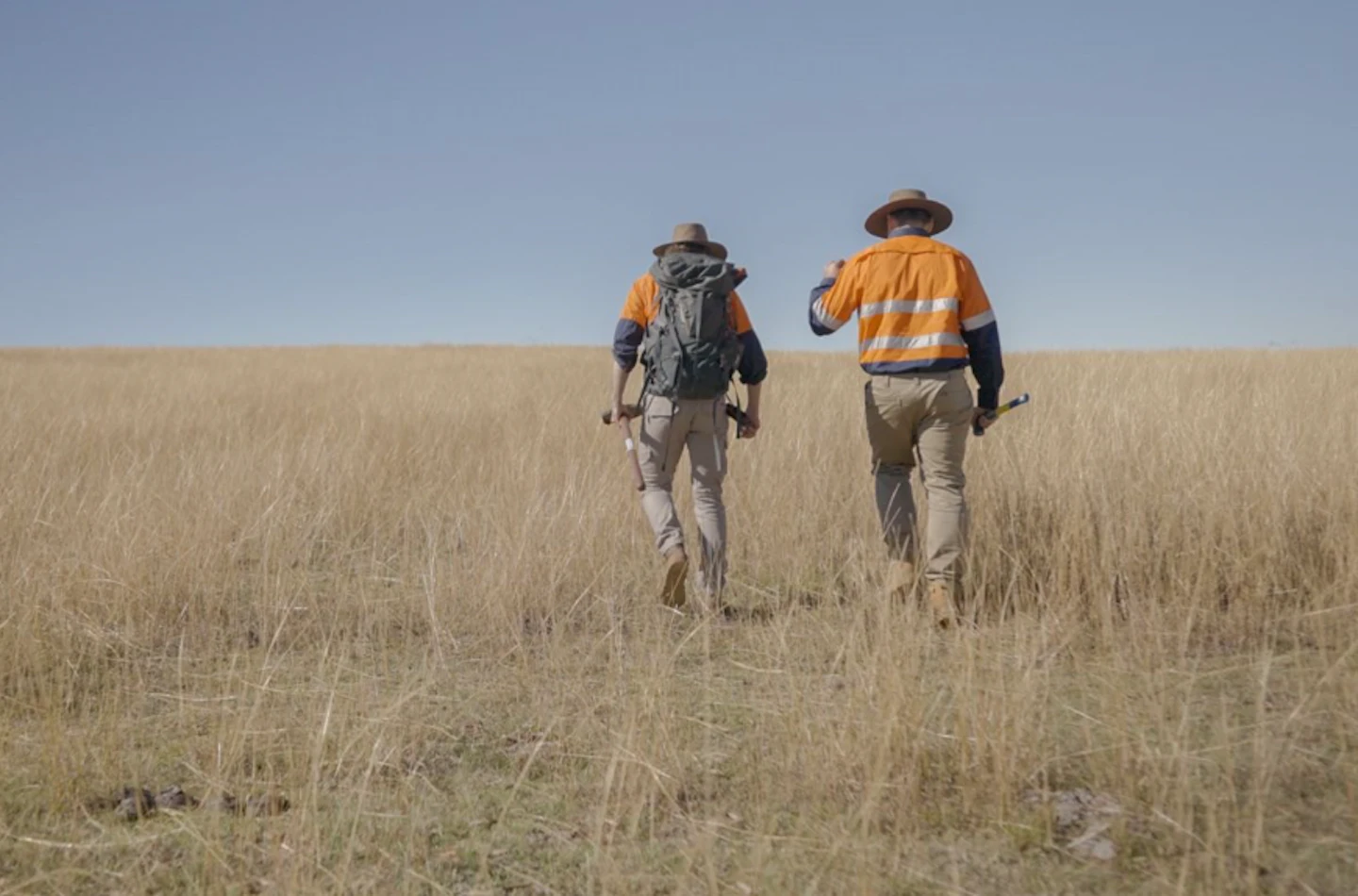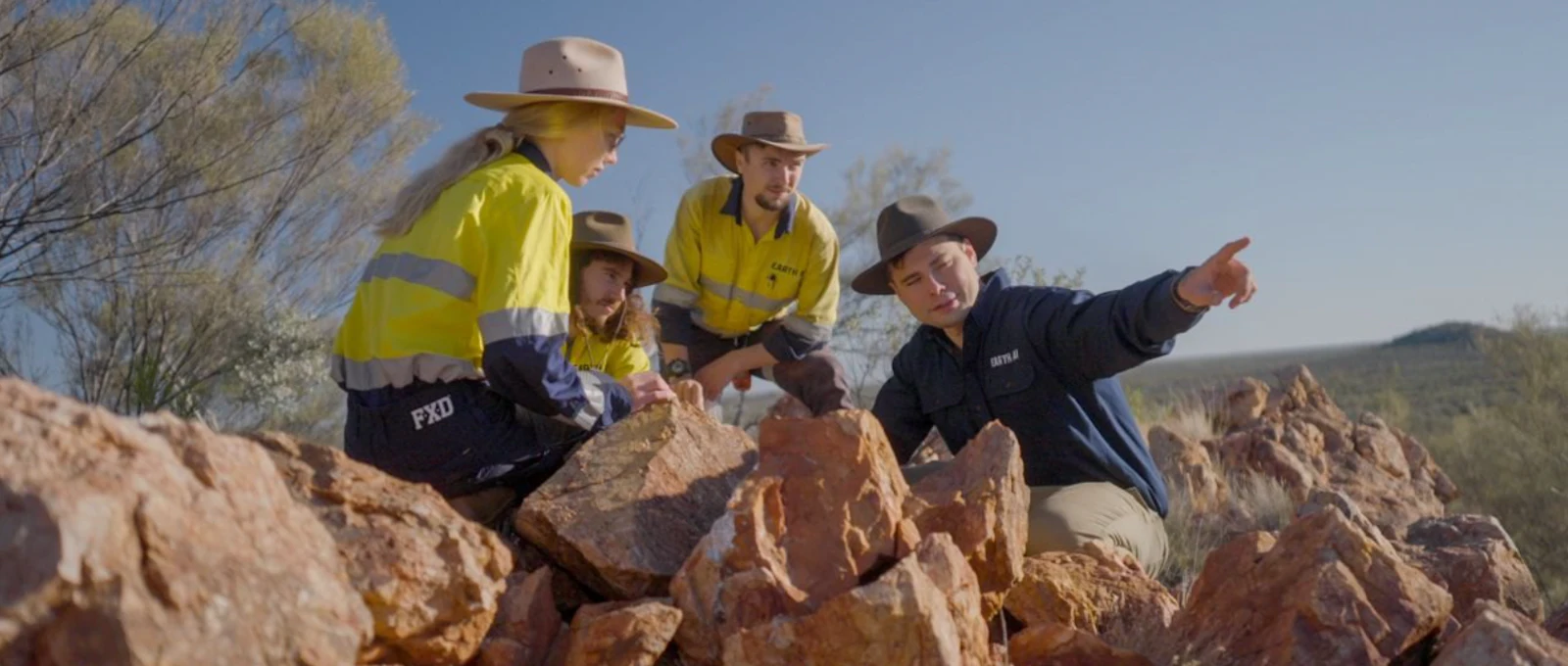
When I started Earth AI nine years ago, I had one conviction: the problem with mineral exploration isn't that we need to go more remote. It's the technology we use. Geologists have been bashing rocks on mountains for decades, waiting for something to show up. That's not an efficient search technology. I wanted to change that.
So we built an AI platform trained on 400 million geological data points, representing 50 years of exploration history across an entire continent. We taught it to look for hydrothermal systems, the geological conditions that create mineral deposits, rather than scanning for the metals directly. Think of it like this: a mineral deposit inside a hydrothermal system is like a seed in an apple. When the seeds get deeper and smaller, they become really hard to find. But apples? Apples are much bigger, much more recognizable.
It worked. Our discovery success rate hit 75%. The industry average is about half a percent. We were finding deposits that didn't fit the textbooks, things academics insisted couldn't exist in certain places. We drilled anyway and proved them wrong.
But then we hit a wall. Not with our predictions. With everything that comes after.
The Bottleneck We Didn't See Coming
Traditional exploration is brutal logistically. You need six types of contractors organized. You're negotiating with landowners, managing equipment schedules, dealing with people who don't show up when they're supposed to. Early on, we learned that even when we gave exploration companies twenty promising sites, they didn't have the muscle to go test them. They wanted us to narrow it to one or two. But we couldn't know which of those twenty was better without drilling.
And nobody was drilling.
So we brought drilling in-house. We found an abandoned drill rig on a coal mining site, called them up, and asked if we could have it. Thirty thousand dollars. We thought building our own drilling capability would be straightforward.
It was not.
It took years. We prototyped, broke things, went back to the drawing board. You can't model geology on a computer; you have to go out and test it. Eventually we developed a mobile, low-disturbance drilling platform that changed how we operate. Today we run multiple rigs around the clock, 24 hours a day, seven days a week. We can mobilize to any site without ground preparation. We contain our own waste management. We have our own drillers. When we finish a hole, we move to the next one immediately. The farmers are happy because all that's left is a tiny hole in the ground that we fill up. Within a week, there's no sign we were ever there.
We've made four discoveries. We're drilling out one of them into a defined resource right now.
The system works. But success created the next constraint.
Seven Kilometers Behind
We scaled drilling faster than the rest of the industry could absorb. We're now more than seven kilometers (7,000 meters of drilled core) behind on assay results. The commercial labs that analyze mineral samples have stretched their turnaround to four or five months.
The reason is structural. Labs have been through enough boom-bust cycles that they refuse to scale capacity even when demand spikes. They know the bust will come eventually. They don't want to be caught with excess infrastructure when it does. Critical minerals demand is currently in boom mode. The labs aren't keeping up.
So our rigs were waiting. Our geological models were going stale. And the thing that makes us different, our iteration speed, was grinding to a halt.
Drill Holes Are Questions
Every drill hole is a question you ask the earth.
I think about it this way: every drill hole is a question you ask the earth. The quality of your next question depends on how quickly you get the answer to your last one.
What We Built
Our in-house assay lab is purpose-built for speed.
Commercial labs handle any sample type, any analysis, any customer. That flexibility comes with overhead. Our lab does one thing, and it does it fast. A single all-encompassing spectrometer that flags anomalous readings. When we strike something interesting in the field, we can confirm results in days and redirect our rigs immediately.
Target turnaround: under a week. For urgent samples, when we hit something that looks genuinely promising, one person can take a single drill hole's sample directly to the lab, crush it, pulverize it, and analyze it in a single day.
We built the facility in about two months. It's already processed more than 31 kilometers of drill core.